11 of 15 in the register · No hue · Coldbank Rake · 8 February 2026
Rhodochrosite
MnCO₃ · Mohs 3.5 – 4
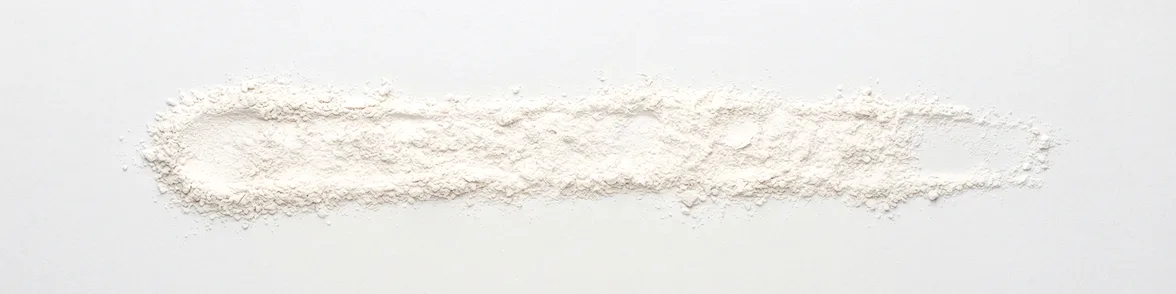
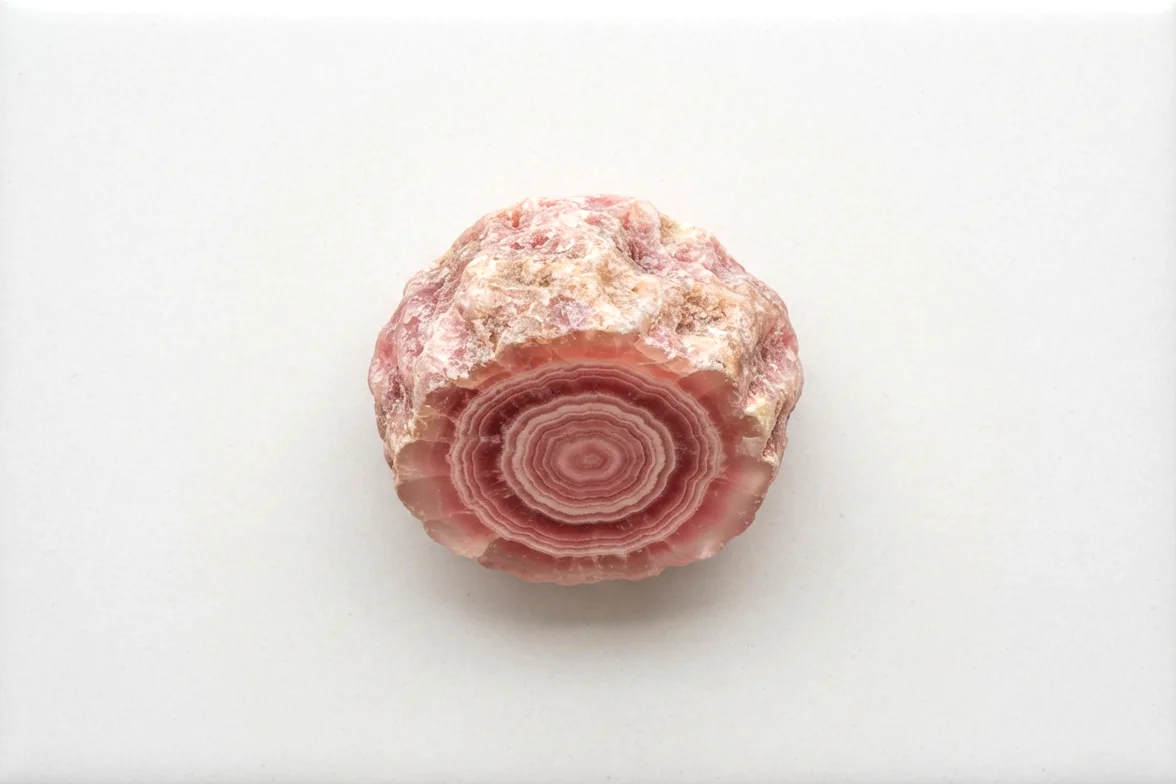
Banded rose pink, and a streak that gives away nothing at all. The specimen everybody wants to be told about and the plate cannot help with.
| Body colour | rose pink, banded |
|---|---|
| Streak | white |
| Measured | #c9c2b8 |
| Deposit | 6.53% |
| Lightness | 78.77 |
| Chroma | 5.80 |
| Hue | — |
| Hardness | 3.5 – 4 |
| Locality | Coldbank Rake |
| Written | 8 February 2026 |
A sawn face across a banded mass, concentric in rose and cream, faintly translucent at the thin edge. It is the specimen visitors pick up, and it is the one the plate has least to say about.
Rhodochrosite is a manganese carbonate. It streaks white, and the measurement has real trouble with it: of the band this site samples, only 6.5% of the pixels differ from the bare plate by enough to count as deposit at all. Everywhere else the powder and the porcelain are the same colour to within the cut. What that 6.5% averages to is L* 78.8 at a chroma of 5.8, and I would not defend the second figure to two places. All the pink is in the crystal structure and none of it survives being broken up, which is the same physics as the sulfur entry and the opposite of the hematite one.
White streaks are the great flat spot in this method. The carbonates streak white, most of the silicates streak white, the sulfates streak white; a white streak eliminates the metallic ores and then hands you back most of the rest of the mineral kingdom. Anybody who tells you the streak test is decisive has been testing sulfides.
So this entry is identified by hardness, by the acid bottle — carbonates fizz, and this fizzes grudgingly in cold dilute acid where a calcite would be enthusiastic about it — and by the banding, which manganese carbonate does in a way few other pink things do. The streak contributed the one thing it could: that whatever this is, it is not a metallic ore. That is not nothing, and it is not much. It is also the nearest entry in the register to having no measurable deposit at all — 6.5% against quartz’s 0.4%, which is the cut this site calls no streak. Sixteen times the coverage, and still the least legible reading here.
It sits at the top of the value arm, the palest powder in the register, immediately below the last entry that has any hue.