03 of 15 in the register · Red · Ladgill Level · 21 June 2024
Hematite
Fe₂O₃ · Mohs 5 – 6
Steel grey and metallic on the outside, red the whole way through. The entry that made me start keeping the register this way.
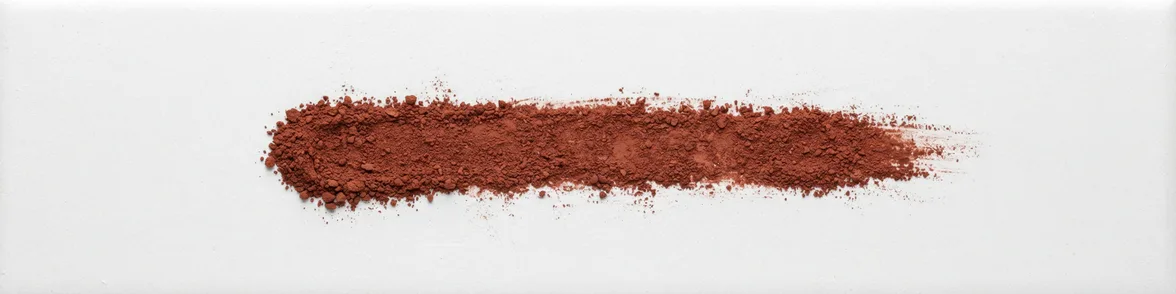
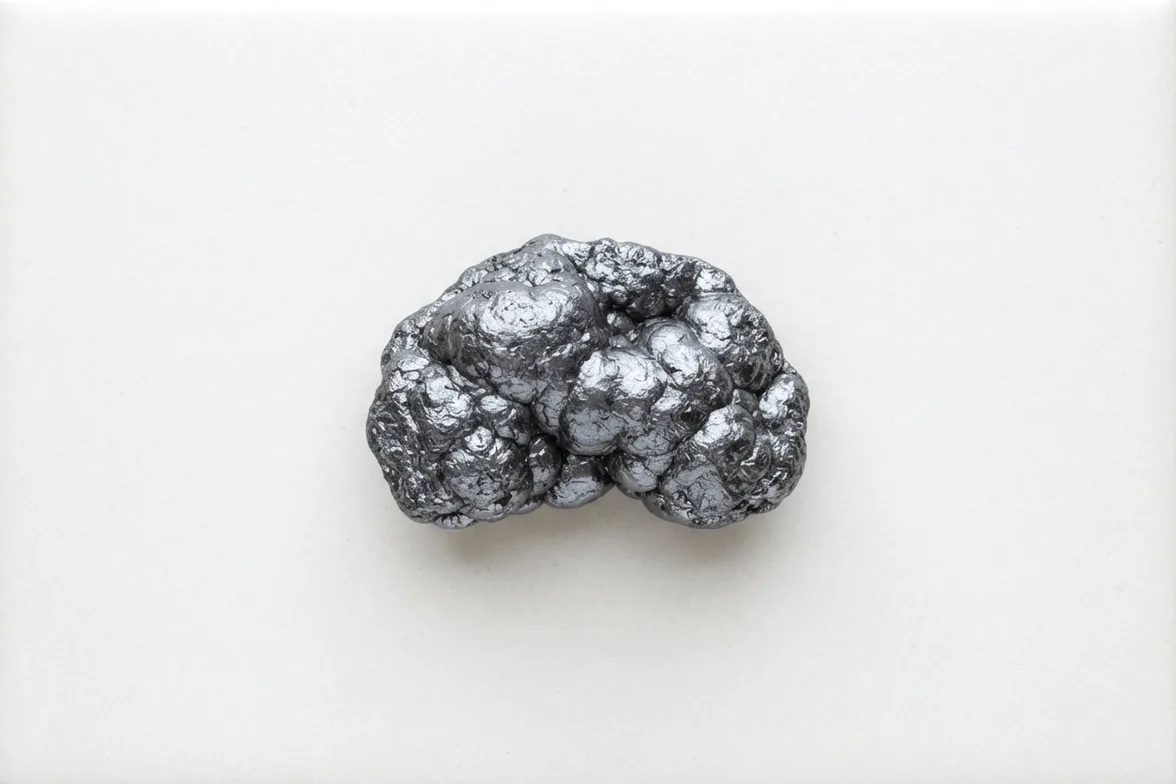
| Body colour | steel grey, metallic |
|---|---|
| Streak | red-brown |
| Measured | #8d4e41 |
| Deposit | 75.21% |
| Lightness | 40.36 |
| Chroma | 31.97 |
| Hue | 37.7° |
| Hardness | 5 – 6 |
| Locality | Ladgill Level |
| Written | 21 June 2024 |
This is the one that started it. I had picked up a kidney of something dark and heavy off the spoil outside the level, decided it was a manganese mineral on the strength of its being black and shiny, and put it in a box for a year. Then I ran it across the plate for the sake of completeness and it drew a line the colour of a butcher’s apron.
Hematite is iron oxide and it is red. It is red as rust is red, as red ochre is red, as most of the older paint in the world is red — and none of that is visible on the specimen, which is grey, with a metallic sheen and a smooth bubbly surface like something poured. The colour lives in the powder because the colour is a property of the compound and the grey is a property of the surface: a coherent metallic surface reflects, and a heap of loose particles a few microns across does not.
That gap between the two — the lump saying one thing, the powder saying another — is the only idea this register has. It is why the entries here are sorted by the colour of the powder and not by the colour of the specimen, and it is why every entry carries both photographs. The specimen photograph on this page is honest and tells you nothing. The streak photograph is the identification.
The measured hue sits at 37.7°, eight degrees off cinnabar and fourteen off erythrite, which puts three specimens that look nothing like one another in a row at the head of the register. Every one of them is red powder. Two of them are not red.