02 of 15 in the register · Red · Sarnwell Sough · 14 March 2025
Cinnabar
HgS · Mohs 2 – 2.5
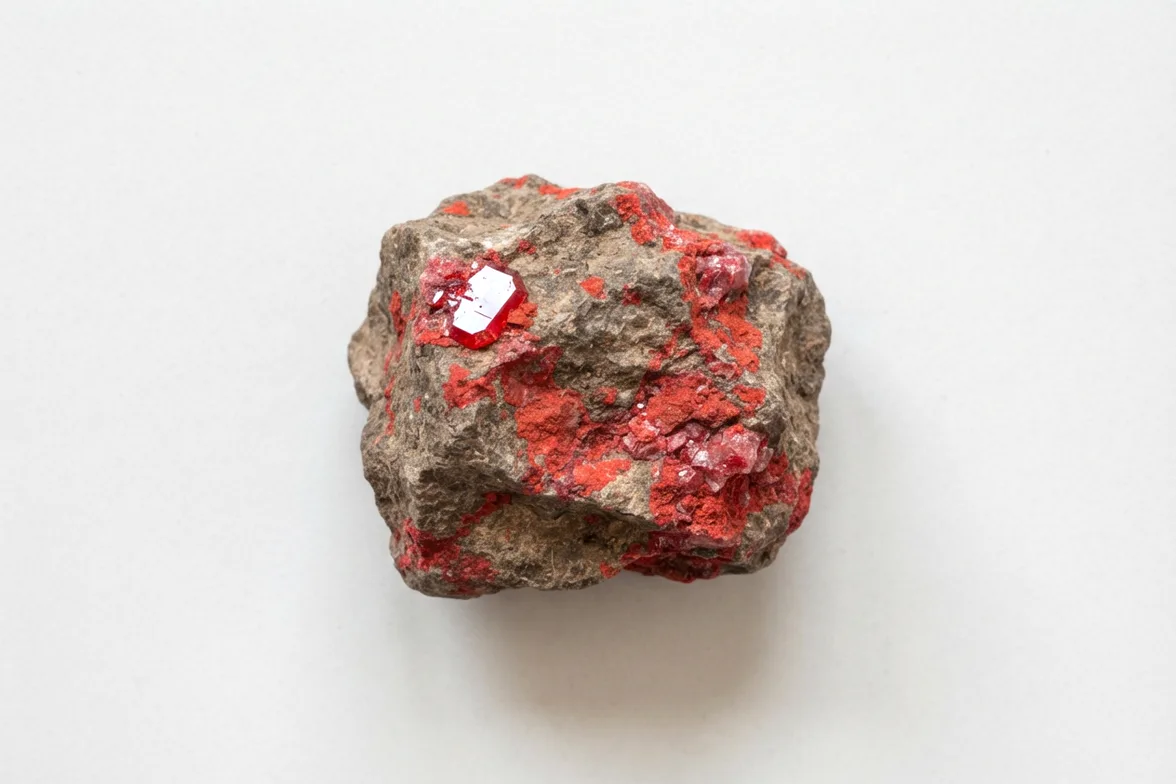
The one specimen in the register where the powder and the lump agree, and the only one I would not put in a pocket.
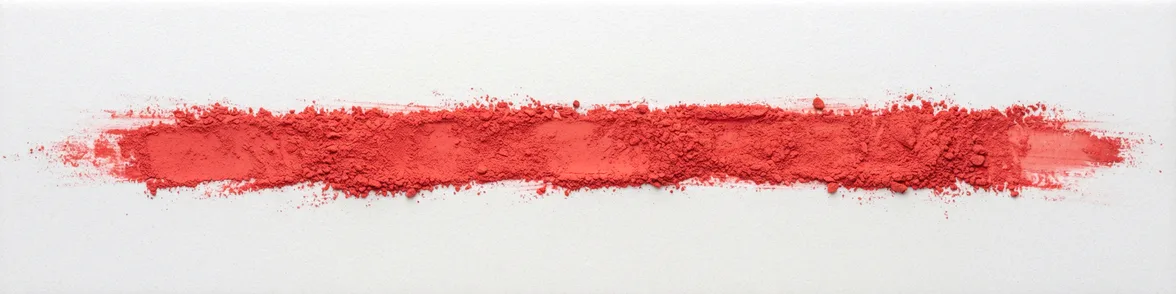
| Body colour | vermilion, dull to bright |
|---|---|
| Streak | scarlet |
| Measured | #dd5551 |
| Deposit | 98.26% |
| Lightness | 54.55 |
| Chroma | 61.28 |
| Hue | 29.9° |
| Hardness | 2 – 2.5 |
| Locality | Sarnwell Sough |
| Written | 14 March 2025 |
It came out of the gravel a hundred yards below the sough mouth, not at the mouth, which is where everything heavy from that working ends up eventually. Grey-brown limestone with red laid into it like something spilled, and one crystal face the size of a fingernail that catches the light and looks wet.
There is no suspense in the streak test here. A mercury sulfide streaks the same scarlet it already is, which makes cinnabar the odd one out in this register: nearly everything else changes its mind on the plate, and this does not. What the test gives you instead is a check. If the red on the rock had streaked brown it would have been something else entirely, and there are two or three earthy red things in this district that would like you to believe they are cinnabar.
I do not carry it loose. Cinnabar is soft enough to mark other specimens in the same bag and it is a mercury ore, so the powder is not something to make more of than the test requires. One stroke, photograph it, wash the plate.
The measured colour is the most saturated thing on this site by a wide margin, which is worth saying out loud, because it means the register opens on a shout and then never gets that loud again. That is a property of the collection rather than a decision. Most powders are dull. This one is paint.
Found something red in a beck?
Red minerals are the ones people most often bring in, and they are almost never cinnabar. Post it and find out what the plate says.