05 of 15 in the register · Yellow · Tarnbeck Hush · 30 August 2024
Limonite
FeO(OH)·nH₂O · Mohs 5 – 5.5
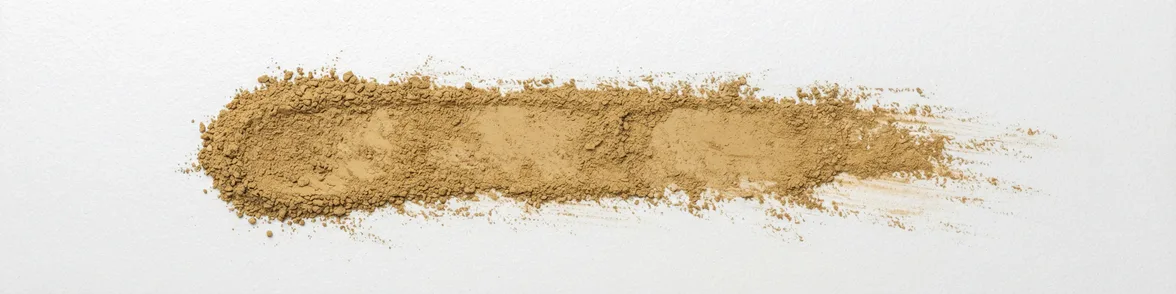
Not strictly a mineral at all, and the most common thing in the district. Its powder is the colour half the county was painted with.
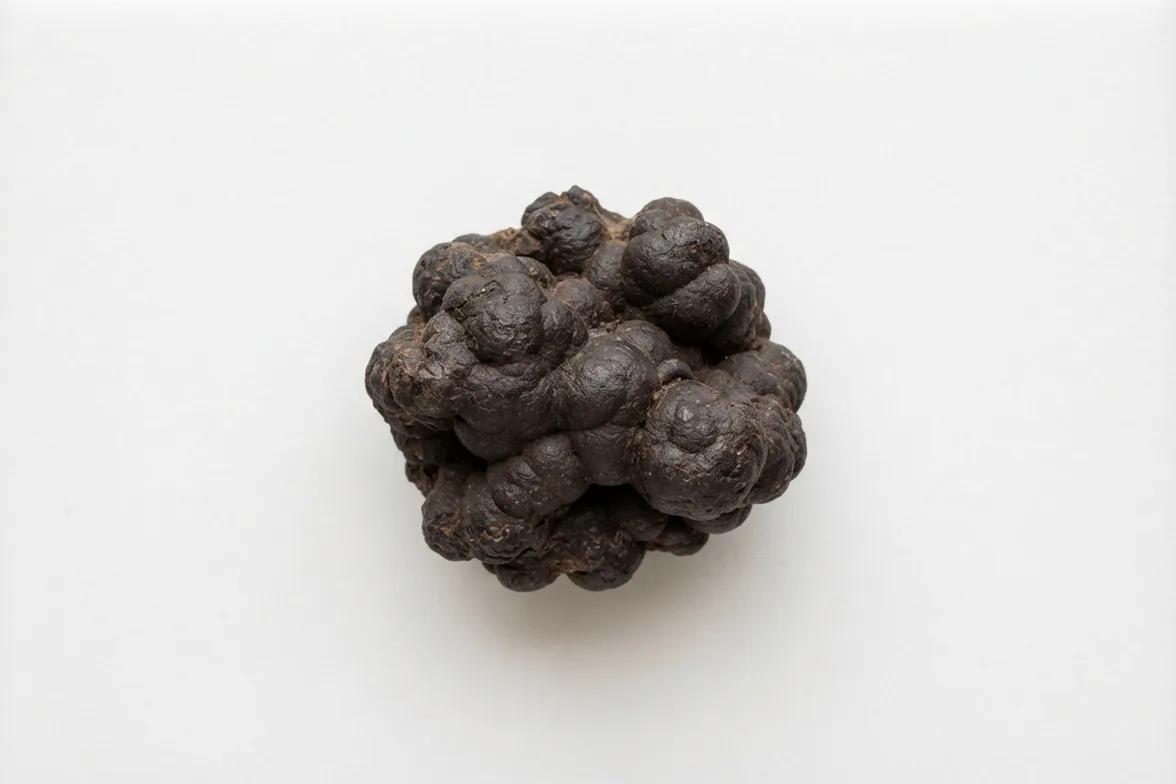
| Body colour | dark brown, botryoidal |
|---|---|
| Streak | yellow-brown |
| Measured | #c19d67 |
| Deposit | 88.29% |
| Lightness | 66.77 |
| Chroma | 33.78 |
| Hue | 79.4° |
| Hardness | 5 – 5.5 |
| Locality | Tarnbeck Hush |
| Written | 30 August 2024 |
Limonite is a name of convenience for a mixture — mostly goethite, some water, some whatever else was going — and a purist will tell you it is not a mineral species. It is also lying about in tons at the bottom of the hush, in dark brown bubbly lumps that look like something that boiled over, and it is the single most common thing anyone in this district picks up and asks about.
The streak is ochre. Not a metaphor for ochre: this is what ochre is, and if you rub the lump hard on the plate and then rub your thumb through the powder you have made the same pigment that is on the walls of every farm building between here and the coast. It comes out at 79.4°, five degrees from realgar, which is a pleasing accident — the most poisonous thing in the register and the most harmless one, next to each other, because the plate does not care.
A hush is a violent thing to have done to a hillside. Water is dammed above the ground, let go, and the whole slope comes off; you get the mineral you were after and a scar that is still bare two hundred years later. Tarnbeck is where the register’s iron comes from, because a hush exposes iron and iron is what is left when everything soluble has been carried away.
Being a mixture, it does not have one right answer. Two lumps out of the same slope streak appreciably different browns, and I have used the one that is the most ordinary rather than the one that is the most attractive.