06 of 15 in the register · Yellow · Whinstone Spoil · 19 January 2026
Sulfur
S · Mohs 1.5 – 2.5
The brightest specimen in the register and very nearly the palest streak. The gap between the two is the whole argument.
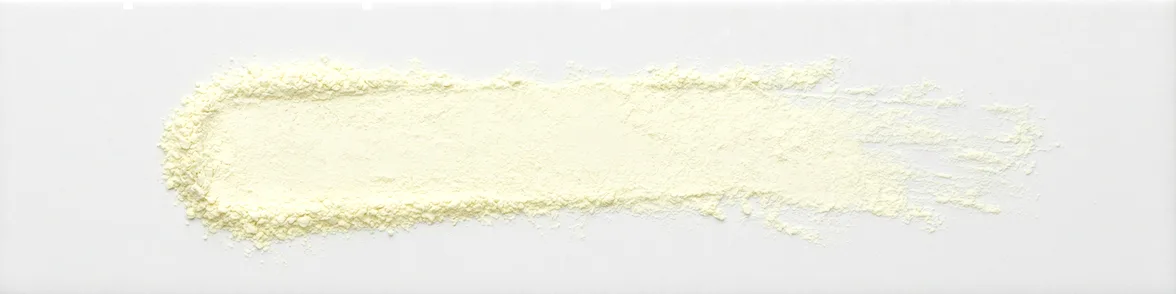
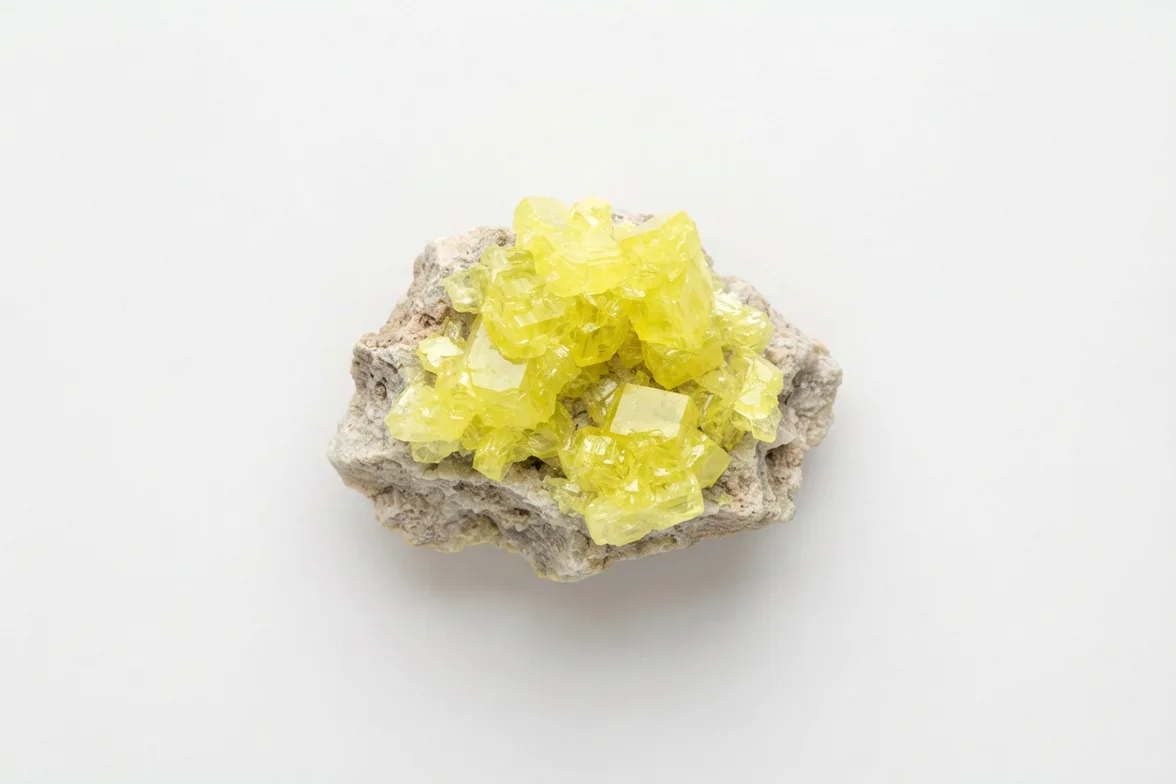
| Body colour | lemon yellow, resinous |
|---|---|
| Streak | pale yellow |
| Measured | #f8f7dc |
| Deposit | 73.68% |
| Lightness | 96.69 |
| Chroma | 13.47 |
| Hue | 106.9° |
| Hardness | 1.5 – 2.5 |
| Locality | Whinstone Spoil |
| Written | 19 January 2026 |
Blocky lemon crystals in a cavity in a quarried lump, with the resinous look that native sulfur always has and that no photograph gets right. Whinstone is a quarry rather than a mine, so it is mostly nothing, and then once in a while a hole in a block with something in it.
Held up, this is the most vivid thing on the site. Streaked, it is very nearly white — L* 96.7, the lightest powder in the register by a clear margin — and it carries only 13.5 of chroma. A little less yellow and it would have fallen off the circle altogether and been filed with the greys.
That is worth sitting with, because it is the opposite of the hematite case and it fails in the opposite direction. Hematite hides a strong colour in a grey lump. Sulfur wears a strong colour and has almost none to give. Both are the same lesson: what the specimen looks like tells you about its surface, and what the powder looks like tells you about the substance. A test that agreed with your eyes would not be worth doing.
Its hue also puts it at 106.9°, at the far end of the yellow sector and heading for green, which is not where anybody would have put a yellow mineral by eye. Pale colours have unreliable hue angles for the same reason near-neutral ones do — there is not much signal in it. I have left it on the circle because it clears the floor honestly, and I have noted here that it is the least certain position in the register.