07 of 15 in the register · Green · Ravenholme Vein · 30 May 2025
Atacamite
Cu₂Cl(OH)₃ · Mohs 3 – 3.5
A copper chloride in a district with no salt in it, which is the part I cannot account for. Unconfirmed.
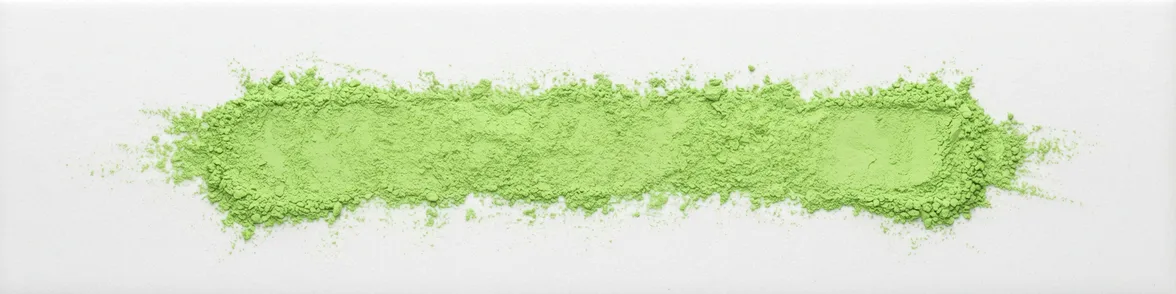
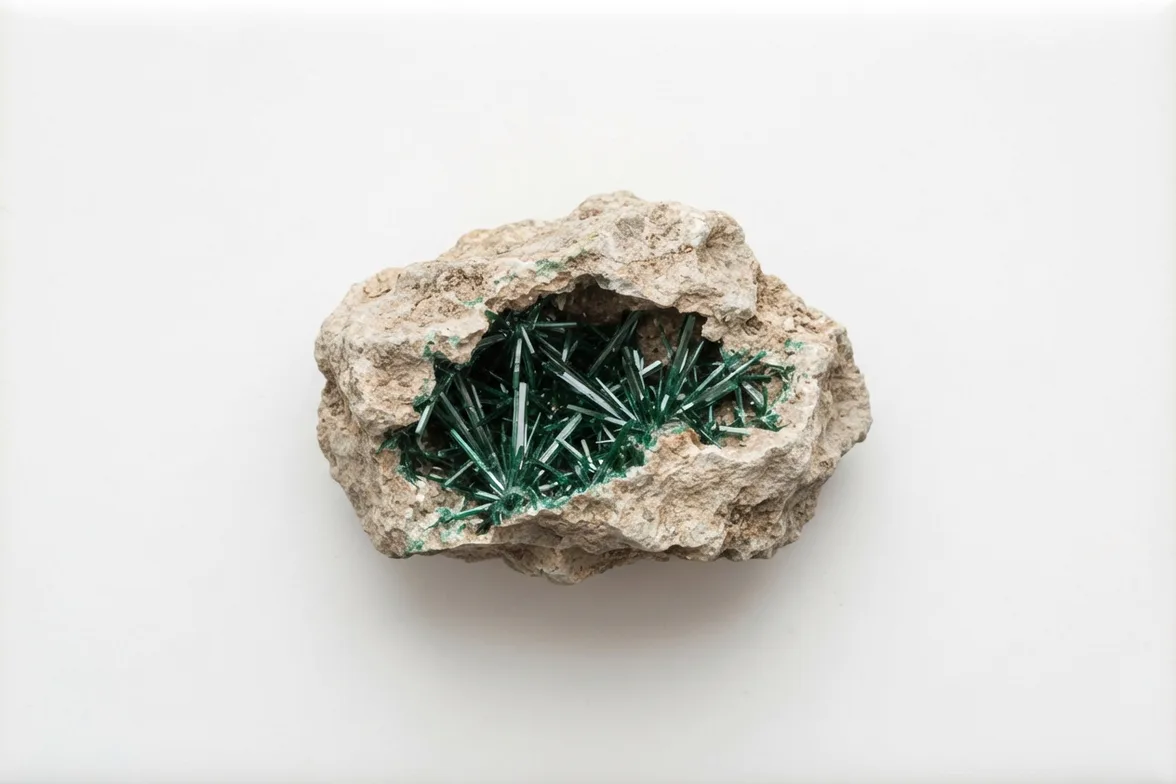
| Body colour | dark emerald, glassy |
|---|---|
| Streak | apple green |
| Measured | #aed575 |
| Deposit | 98.81% |
| Lightness | 80.59 |
| Chroma | 51.48 |
| Hue | 123.2° |
| Hardness | 3 – 3.5 |
| Locality | Ravenholme Vein |
| Written | 30 May 2025 |
This identification is not confirmed. It is a copper halide on the strength of a green streak, a hardness around 3, and a bead test I do not entirely trust, and it is recorded here as atacamite because that is the likeliest of the four things it could be. If you know the group properly, please say so.
A spray of slender dark emerald prisms, glassy rather than silky, in a cavity in the weathered rock a few feet from where the malachite came from. The streak is apple green — brighter and more yellow than malachite’s, at 123°, which puts it earlier in the register than its neighbour despite looking considerably greener to the eye. That is the usual trouble with green: a dark saturated green and a pale yellow-green sit in almost the same direction and the eye reads them as unrelated.
What bothers me is the chemistry. Atacamite is a copper chloride and it is characteristic of arid coastal ground, where salt and copper get at each other. There is no salt here and it is not arid; it rains on this vein roughly two days in three. Either the chloride came from somewhere I have not thought of, or this is one of the other three minerals and I have talked myself into the interesting answer.
Which is a good reason for a register to publish its measurements rather than only its conclusions. The hue angle, the chroma and the lightness on this page are true of the photograph whatever the label turns out to be, and the label is the part that can be wrong.