08 of 15 in the register · Green · Ravenholme Vein · 27 September 2024
Malachite
Cu₂CO₃(OH)₂ · Mohs 3.5 – 4
Bottle green in bands, pale green on the plate, and the beginning of the only hundred feet of this district that is interesting.
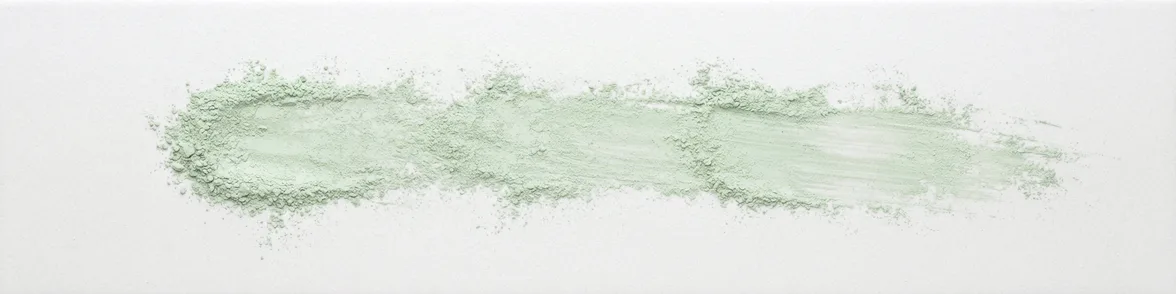
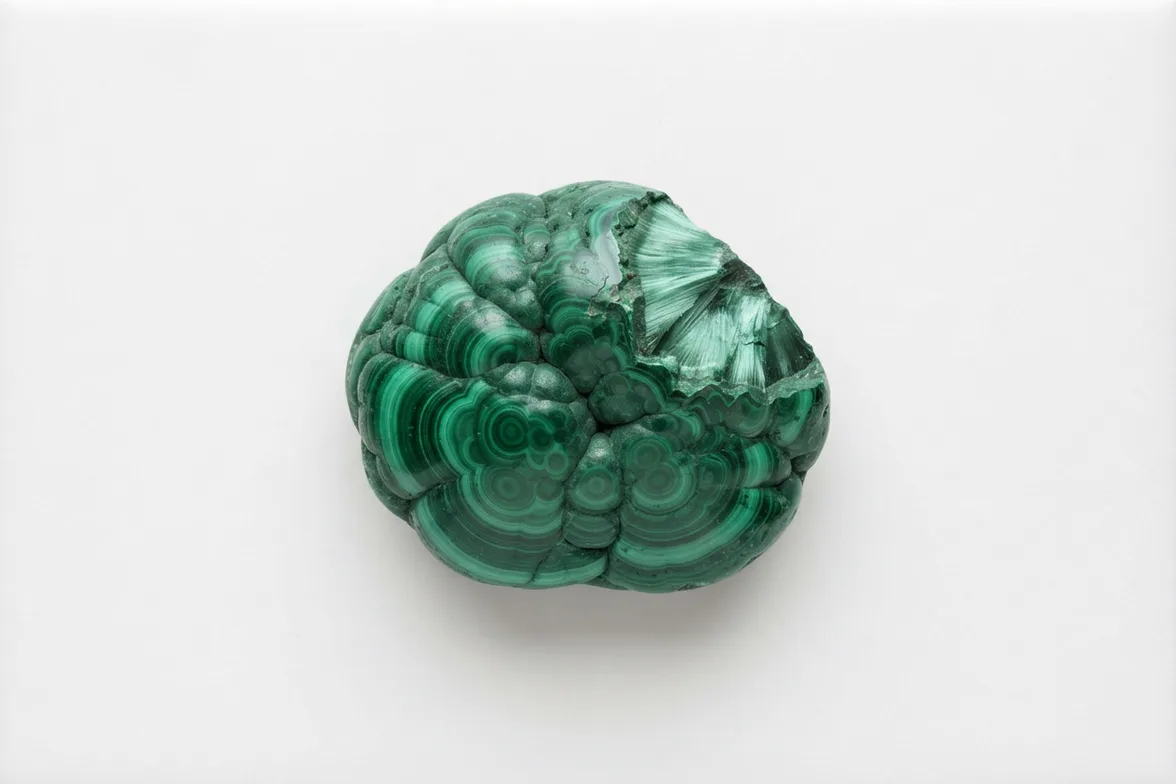
| Body colour | deep green, banded |
|---|---|
| Streak | pale green |
| Measured | #c7d5c2 |
| Deposit | 54.76% |
| Lightness | 83.85 |
| Chroma | 11.19 |
| Hue | 136.2° |
| Hardness | 3.5 – 4 |
| Locality | Ravenholme Vein |
| Written | 27 September 2024 |
Everything green or blue in this register came out of about a hundred feet of one vein at Ravenholme, and this is the commonest of it. Rounded, banded in two or three greens, with a silky fibrous break on one side where it has been knocked — the classic look, and one of the few minerals that is genuinely easy.
The streak is a pale, slightly dusty green, quite a lot lighter than the specimen but the same direction: 136°. It is one of the honest ones. A copper carbonate is green because copper is green in that arrangement, and grinding it does not change what the copper is doing, only how much light comes back off it.
Ravenholme is a copper vein in a district that was worked for lead, which is why nobody bothered with it and why there is anything left. The secondary minerals — the ones that formed later, where water and air got at the primary ore — are the whole of what makes it worth the walk, and they occur in a band a few feet thick where the vein passes through the weathered zone. Above it there is nothing. Below it there is copper sulfide, which is black and dull and which nobody has ever picked up out of interest.
Its chroma is 11.19, which is above the floor but not by a great deal, and it is the least saturated thing still on the circle. I have said elsewhere that the floor is a real cut and not a preference; this is the entry that shows what it costs. Move the cut up by four and the register loses its greens.