14 of 15 in the register · No hue · Tarnbeck Hush · 23 July 2025
Magnetite
Fe₃O₄ · Mohs 5.5 – 6.5
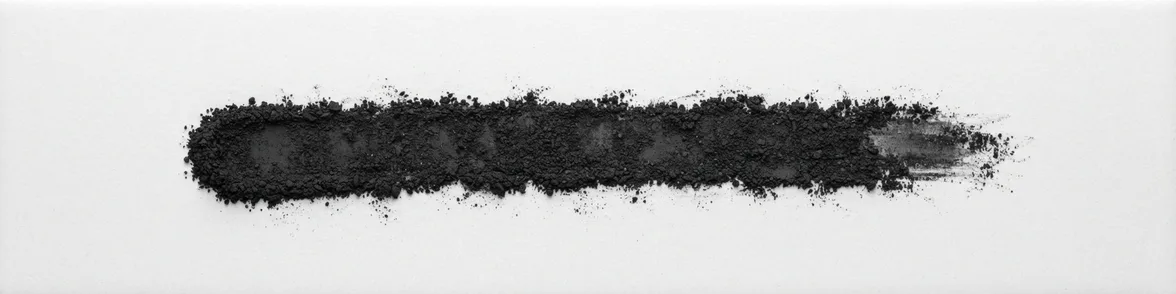
Black, and black on the plate, and the darkest thing in the register. The only entry identified by a test the plate cannot do.
| Body colour | black, metallic |
|---|---|
| Streak | black |
| Measured | #3c3c3c |
| Deposit | 91.76% |
| Lightness | 25.51 |
| Chroma | 0.01 |
| Hue | — |
| Hardness | 5.5 – 6.5 |
| Locality | Tarnbeck Hush |
| Written | 23 July 2025 |
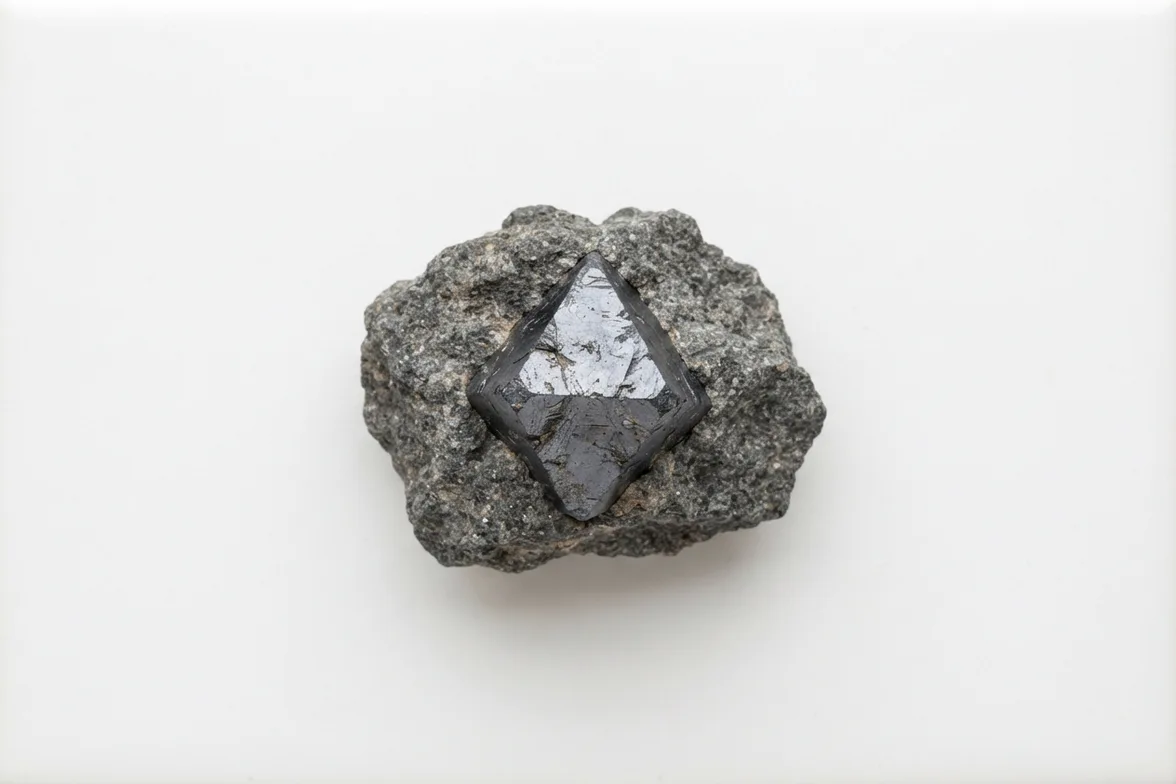
A black octahedron with dull faces in a coarse grey rock, which is exactly what the diagram in every introductory book looks like, and which almost nothing in the field ever does.
The streak is black — L* 25.5, chroma 0.01, which is the closest thing to a true neutral in the register and about as achromatic as an eight-bit photograph is capable of being. It is the bottom of the value arm and the last entry in the whole order that has a position at all.
The plate cannot identify this. A black mineral with a black streak could be several things and the powder test has run out of information, which is a useful admission for a site built on the powder test to make. What identifies it is a magnet, and it is not subtle: the specimen picks up a needle and holds it. That is the one identification in this register that was made by a property the streak plate cannot reach.
I have thought about whether that undermines the arrangement. I do not think it does, but it does bound it. Sorting by streak is a way of organising a collection, not a theory of what minerals are, and it fails where powders converge — which is precisely at the two ends of the value scale, in the whites and in the blacks, where half of mineralogy lives. Between them it works very well, and past them you need a magnet, an acid bottle, or a laboratory.
It came out of the hush with the limonite, which makes sense: the iron in this district is mostly the same iron, in different states of being got at by water.