15 of 15 in the register · No streak · Whinstone Spoil · 2 March 2024
Quartz
SiO₂ · Mohs 7
The commonest mineral in the district, the first specimen written up, and the only one the plate cannot read. It has no place in the order and it stays in the register.
| Body colour | colourless to milky |
|---|---|
| Streak | none |
| Measured | — |
| Deposit | 0.42% |
| Lightness | 94.20 |
| Chroma | 0.00 |
| Hue | — |
| Hardness | 7 — above the plate |
| Locality | Whinstone Spoil |
| Written | 2 March 2024 |
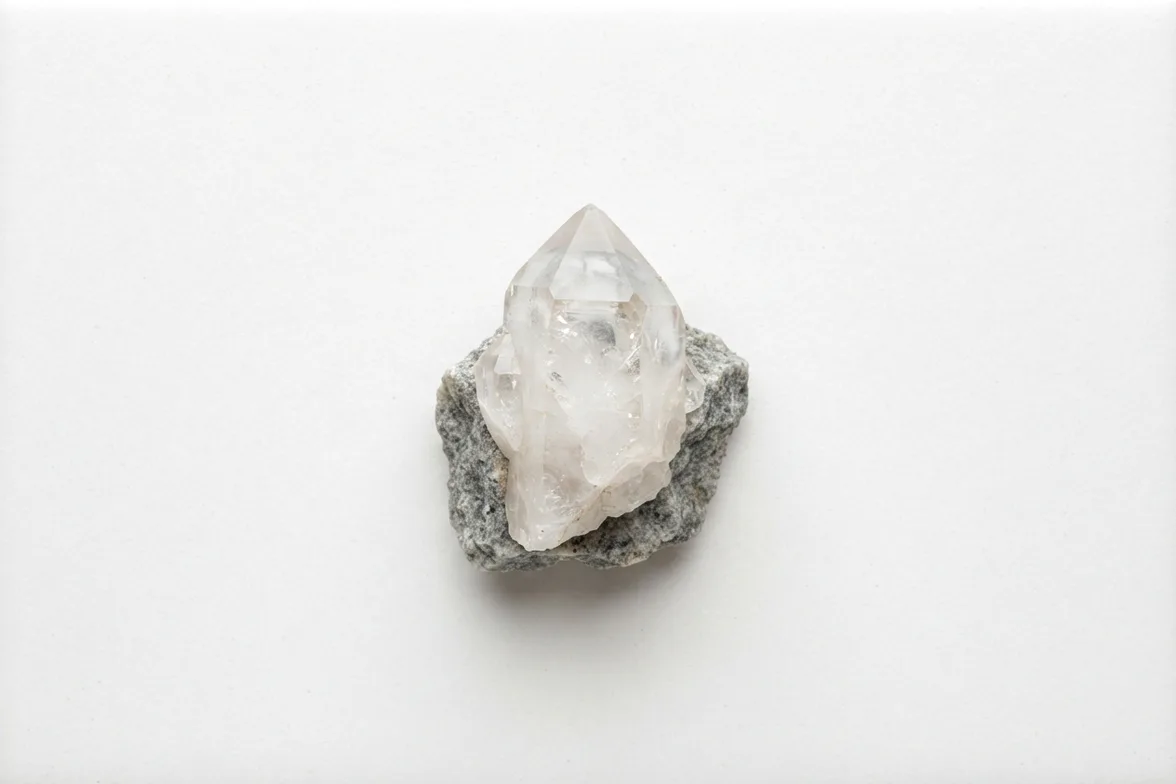
A clear-to-milky crystal with a sharp termination, on a chip of grey rock. It was the first thing I wrote up, in the ordinary way, expecting nothing from it.
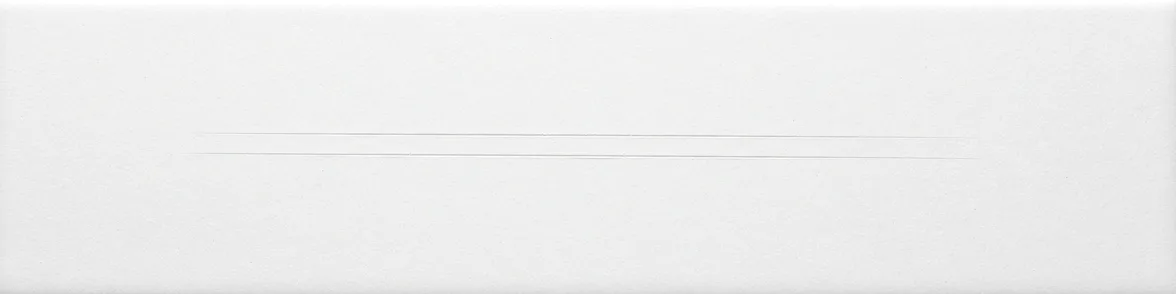
Quartz is Mohs 7. An unglazed porcelain plate is about 6.5. What happens when you draw one across the other is not a streak — it is machining: the crystal cuts two fine lines into the tile and leaves no deposit in them at all. The photograph on this page is that plate, photographed exactly as every other plate here was.
The test this site applies to every entry is the same one: count the pixels across the middle of the plate that sit more than a fixed distance from the bare porcelain, and call those the deposit. Cinnabar covers 98% of the band. Galena covers all of it. The palest streak in the register, rhodochrosite, still manages 6.5%. This covers 0.42%, and what that 0.42% turns out to be is the two scratches. There is nothing there. The measurement returned the instrument.
Most books write the streak of quartz as white. That is a convention, and it is the wrong kind of tidy. White is what the plate is. Recording it means recording that you looked at a white tile and saw a white tile, and the reader has no way of telling that from a specimen that genuinely left a white powder — which rhodochrosite, three entries above this one, actually did.
So this register writes it as nothing, and the consequence is structural: with no colour there is no hue angle, with no hue angle there is no position, and quartz cannot be sorted at all. It is not first and it is not last. It sits after the order, in a field painted the same colour as the page, and the swatch beside it in the key is a hole.
I could have parked it at the front, or filed it with the whites, or quietly left it out. All three would have made the site tidier and one of them would have made it a lie. An archive that has a rule ought to show you the thing the rule cannot hold.